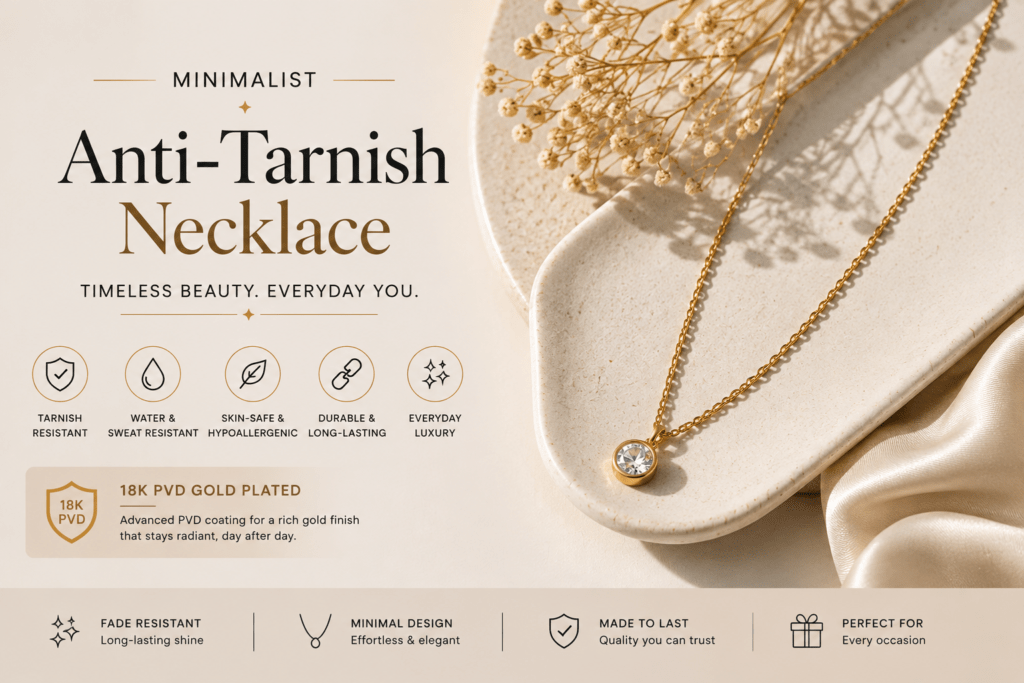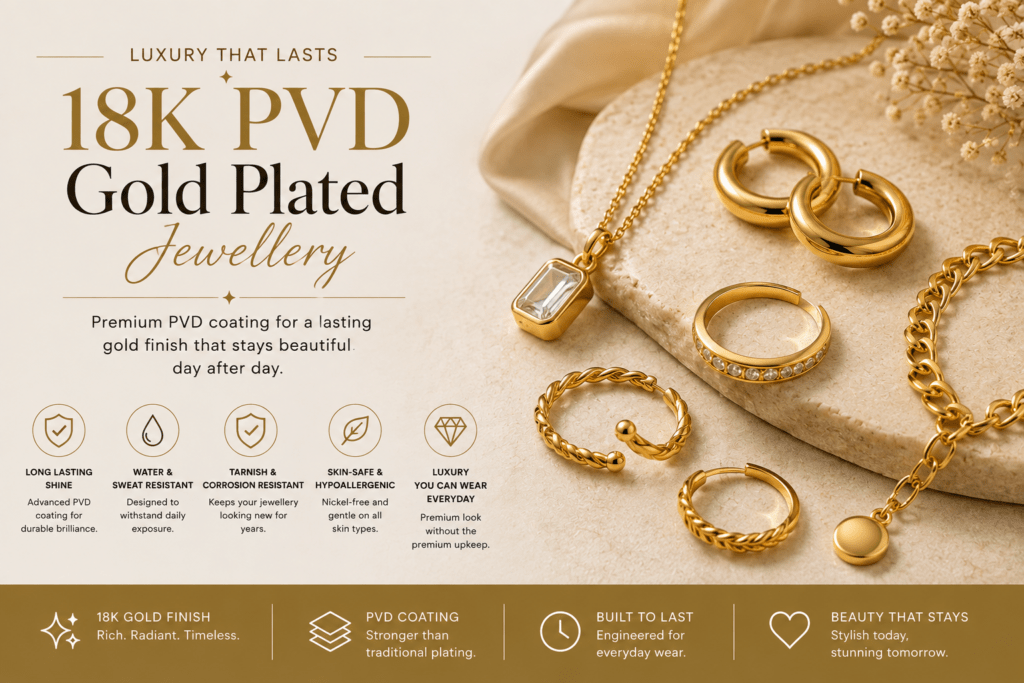

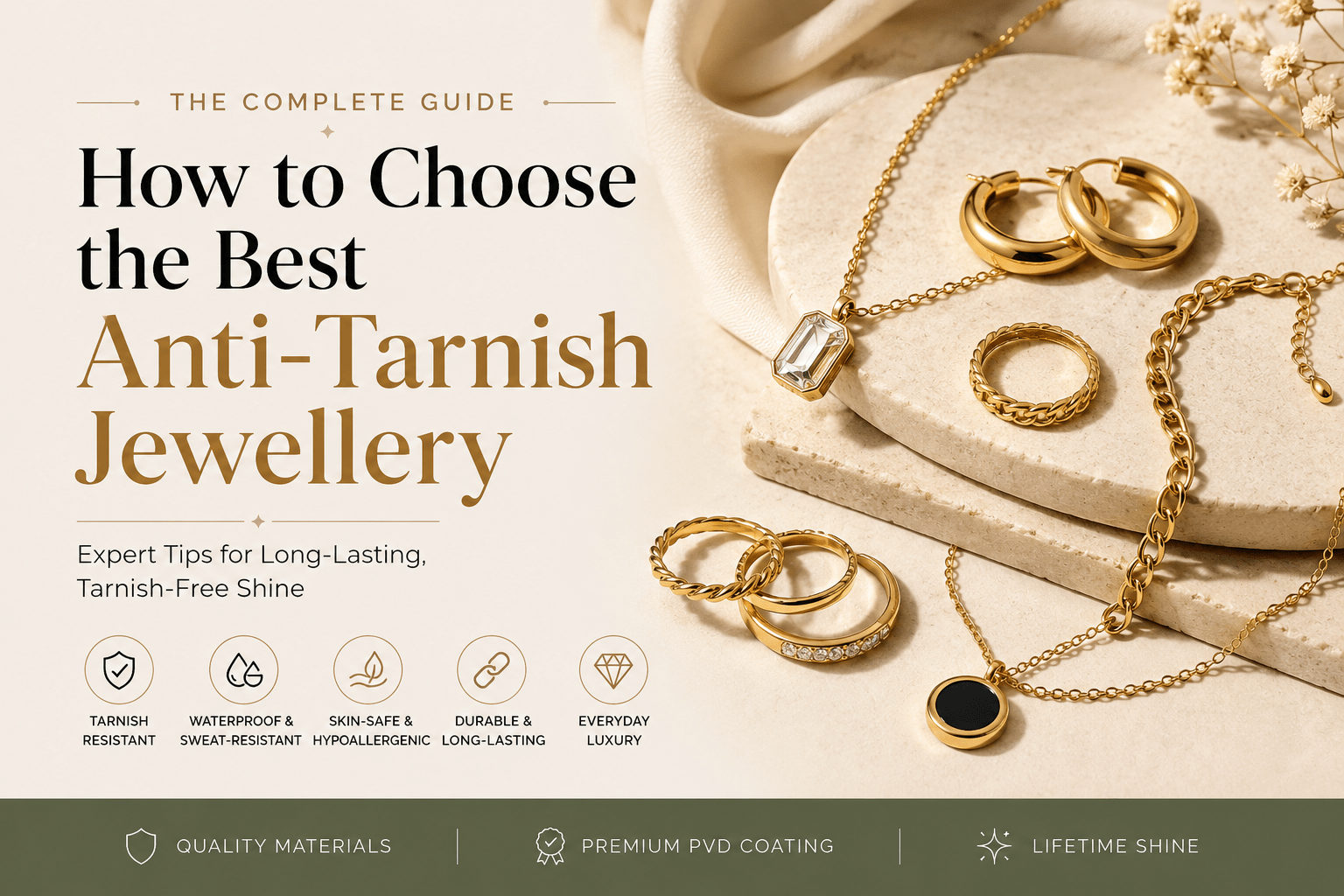
Learn how to choose best anti-tarnish jewellery. Discover PVD gold plating, stainless steel, waterproof jewellery, care tips, and expert buying advice.
How to Choose Best Anti-Tarnish Jewellery
Buying jewellery should be exciting—not frustrating. Yet many people have experienced the disappointment of seeing a beautiful necklace lose its shine, a ring change color, or earrings leave green marks on the skin after just a few wears.
Whether it’s caused by sweat, humidity, water, or everyday exposure to air, tarnishing can quickly turn a favorite accessory into something you no longer want to wear.
That’s exactly why anti-tarnish jewellery has become one of the biggest trends in the fashion industry. More shoppers are moving away from traditional fashion accessories that fade quickly and investing in tarnish-resistant jewellery
designed to maintain its beauty for months—or even years—with proper care.
Modern manufacturing techniques have completely transformed affordable fashion jewellery. Today, high-quality pieces made from stainless steel jewellery, enhanced with 18K PVD gold plating, advanced
PVD coating, or rhodium plating, offer exceptional durability while maintaining the luxurious appearance of precious metals. The result is jewellery that is more resistant to fading, discoloration, moisture, and daily wear than ever before.
Whether you’re looking for elegant layering necklaces, trendy stackable rings, timeless hoop earrings, or stylish bracelets for everyday use, understanding what makes jewellery truly anti-tarnish will help you make a smarter investment.
In this guide, you’ll learn how to identify genuine tarnish-free jewellery, understand the materials behind its performance, evaluate quality before buying, and choose pieces that combine beauty, comfort, and longevity.
Why Anti-Tarnish Jewellery Has Become So Popular
How to Choose Best Anti-Tarnish Jewellery
Fashion trends come and go, but convenience never goes out of style. Today’s consumers want accessories that complement their busy lifestyles without requiring constant maintenance.
Imagine wearing your favorite necklace to work, a weekend brunch, or even while traveling without worrying that it will lose its shine after a few outings. That’s the appeal of daily wear jewellery.
Unlike traditional costume jewellery, modern premium fashion jewellery is engineered to withstand everyday conditions. Many pieces are designed to be waterproof jewellery or at least water-resistant jewellery,
making them suitable for occasional exposure to water without immediate damage.
Another major reason for the popularity of anti-tarnish collections is comfort. Many brands now produce hypoallergenic jewellery, skin-safe jewellery, and nickel-free jewellery, reducing the chances of irritation for people with sensitive skin. If you’ve ever experienced itching or redness after wearing inexpensive accessories,
choosing sensitive skin jewellery made from a non-reactive metal can make a significant difference.
Consumers are also becoming more value-conscious. Rather than replacing faded accessories every few months, they’re choosing long-lasting jewellery that offers better jewellery durability and a lower long-term cost.
What Exactly Is Anti-Tarnish Jewellery?
How to Choose Best Anti-Tarnish Jewellery
How to Choose Best Anti-Tarnish JewelleryDespite the name, no jewellery is completely immune to aging. Instead, anti-tarnish jewellery refers to accessories specifically design
ed to resist oxidation, fading, and discoloration for much longer than conventional fashion jewellery.
The secret lies in the combination of materials and finishing techniques.
Most premium pieces begin with gold-plated stainless steel, which provides excellent strength and natural resistance to corrosion. Stainless steel is already known for its impressive oxidation resistance, making it an ideal base metal.
Manufacturers then apply advanced protective layers such as 18K PVD gold plating or other forms of quality plating. Unlike traditional electroplating, PVD coating (Physical Vapor Deposition) creates a harder, more durable surface that bonds tightly with the metal underneath.
This advanced finish provides several important benefits:
- Improved color retention
- Enhanced corrosion-resistant finish
- Better resistance against scratches
- Greater protection from moisture
- Longer-lasting shine
Because of these advantages, many premium brands now market their products as rust-proof jewellery, fade-resistant jewellery, or moisture-resistant jewellery.
However, it’s important to remember that “anti-tarnish” doesn’t mean “indestructible.” Proper care still plays an important role in maintaining your jewellery’s appearance over time.
Understanding the Materials That Matter
Choosing the best jewellery starts with understanding what’s underneath the shine.
Stainless Steel: The Foundation of Durable Jewellery
One of the most trusted materials in modern fashion accessories is stainless steel jewellery.
Unlike cheaper alloy-based alternatives, stainless steel naturally resists rust, corrosion, and everyday wear. This makes it an excellent base for premium coatings and ideal for people seeking dependable everyday accessories.
High-quality stainless steel also performs well in humid climates, making it particularly suitable for countries where heat and moisture can accelerate tarnishing.
18K PVD Gold Plating
If you’ve been researching jewellery recently, you’ve probably seen brands highlighting 18K PVD gold plating.
PVD (Physical Vapor Deposition) is a modern coating technology that creates an exceptionally durable finish. Instead of simply applying a thin decorative layer, the coating becomes tightly bonded to the underlying metal.
Compared with conventional gold plating, PVD offers:
- Better scratch resistance
- Improved longevity
- Superior shine
- Enhanced durability
- More consistent color
This is one reason why many shoppers looking for everyday luxury jewellery prefer PVD-coated designs over standard plated jewellery.
Rhodium Plating
For silver-toned jewellery, rhodium plating remains one of the most respected finishing methods.
Rhodium creates a brilliant reflective surface while adding another layer of protection against scratches and tarnishing.
It’s commonly used on premium rings, earrings, and luxury accessories because of its elegant appearance and excellent durability.
Features You Should Look for Before Buying
Many brands advertise their collections as anti-tarnish, but not all products deliver the same performance.
When comparing options, look beyond the marketing claims.
A genuinely well-made piece often offers multiple protective features, including:
- Water-resistant jewellery construction
- Sweat-resistant jewellery for active lifestyles
- Humidity-resistant jewellery suitable for tropical climates
- Shower-safe jewellery for occasional water exposure
- Swim-safe jewellery when specifically recommended by the manufacturer
- Strong oxidation resistance
- Durable quality plating
- Excellent color retention
These features work together to extend the life of your jewellery while reducing maintenance requirements.
As we’ll explore in the next section, understanding these technical details is only the first step. You’ll also need to evaluate craftsmanship, plating quality, brand reputation, and material certifications before making a purchase.
Check the Base Material First
The foundation of any long-lasting piece of jewellery is its base metal. Even the highest-quality coating won’t perform well if it’s applied to a poor-quality material.
Why Gold-Plated Stainless Steel Is a Smart Choice
Among today’s most reliable options, gold-plated stainless steel stands out for its exceptional strength and resistance to everyday wear.
Unlike inexpensive alloy metals that may corrode or discolor quickly, stainless steel offers excellent oxidation resistance and supports superior jewellery durability. It is also less likely to bend, chip, or lose its shape over time.
This makes it an ideal foundation for modern anti-tarnish jewellery, especially when combined with advanced plating technologies.
When shopping online, check the product description carefully. If a brand clearly mentions stainless steel jewellery, it’s generally a positive sign that durability has been prioritized.
2. Understand the Importance of PVD Coating
One of the biggest innovations in fashion jewellery is PVD (Physical Vapor Deposition) coating.
Unlike traditional electroplating, which deposits a thin layer of metal onto the surface, PVD uses advanced technology to create a stronger bond between the coating and the base material.
This results in:
- Better scratch resistance
- Longer-lasting shine
- Superior color retention
- Improved resistance to fading
- Enhanced corrosion-resistant finish
Because of these advantages, jewellery featuring 18K PVD gold plating has become increasingly popular among people who wear accessories every day.
Think of it like the protective coating on a premium smartphone screen—it helps preserve the original appearance despite regular use.
3. Don’t Confuse Waterproof with Anti-Tarnish
One of the most common misconceptions is that waterproof jewellery and anti-tarnish jewellery are exactly the same.
They’re related—but they’re not identical.
Waterproof Jewellery
Designed to tolerate exposure to water without immediate damage.
Water-Resistant Jewellery
Can handle occasional moisture but shouldn’t remain submerged for long periods.
Tarnish-Resistant Jewellery
Specifically engineered to resist oxidation and discoloration over time.
Many premium collections combine all three characteristics, but it’s important to verify what the manufacturer actually guarantees.
If you frequently wash your hands, travel, or live in a humid climate, choosing water-resistant jewellery with strong anti-tarnish properties offers the best balance of durability and convenience.
4. Consider Your Lifestyle Before Buying
The “best” jewellery isn’t necessarily the most expensive—it’s the one that suits your daily routine.
For Office Professionals
Minimalist styles are both versatile and elegant.
Look for:
- Layering necklaces
- Simple pendants
- Delicate chains
- Elegant hoop earrings
These pieces pair effortlessly with formal and casual outfits while maintaining a polished appearance.
For Students
Students often need accessories that can handle busy schedules without constant care.
Choose:
- Stackable rings
- Small studs
- Lightweight bracelets
- Simple chains
These styles provide everyday elegance while minimizing maintenance.
For Active Lifestyles
If you exercise regularly or spend time outdoors, prioritize:
- Sweat-resistant jewellery
- Moisture-resistant jewellery
- Durable daily wear jewellery
These features help protect your accessories from perspiration and environmental exposure.
For Travelers
Frequent travelers benefit from jewellery that can adapt to changing weather conditions.
Look for collections marketed as:
- Humidity-resistant jewellery
- Rust-proof jewellery
- Fade-resistant jewellery
These designs are particularly useful in coastal regions where salt air accelerates corrosion.
5. Choose Jewellery That Matches Your Skin
Comfort is just as important as appearance.
If you’ve ever experienced itching, redness, or irritation after wearing earrings or rings, the metal may have contained nickel or other reactive materials.
Fortunately, many modern brands now offer:
- Hypoallergenic jewellery
- Nickel-free jewellery
- Skin-safe jewellery
- Sensitive skin jewellery
These products are designed using non-reactive metal components that reduce the likelihood of allergic reactions.
For people with sensitive skin, this feature isn’t simply a luxury—it’s essential.
6. Examine the Plating Quality
Two necklaces may look identical in photographs, yet perform very differently after six months.
The difference usually lies in the plating.
Signs of excellent quality plating include:
- Even color across the surface
- Smooth finish without rough patches
- Consistent shine
- No visible peeling or bubbles
- Clear information about coating technology
Brands that openly explain their manufacturing process generally inspire greater confidence than those relying only on buzzwords.
7. Think About Long-Term Value, Not Just Price
Many shoppers automatically choose the cheapest option.
Ironically, this often leads to spending more money over time.
Imagine buying a ₹500 necklace every three months because it fades quickly.
Now compare that with purchasing a ₹1,800 necklace that remains beautiful for years.
The second option usually offers far greater value.
High-quality long-lasting jewellery becomes more economical because it requires fewer replacements and maintains its appearance much longer.
This is why many buyers now see premium anti-tarnish collections as an investment rather than an expense.
8. Select Pieces You’ll Actually Wear
Instead of filling your jewellery box with trendy items you’ll rarely use, build a versatile collection that complements your lifestyle.
Consider investing in timeless essentials such as:
Anti-Tarnish Necklaces
Perfect for layering or wearing alone with both casual and formal outfits.
Anti-Tarnish Earrings
Classic studs and elegant hoop earrings remain wardrobe staples that never go out of style.
Anti-Tarnish Rings
Modern stackable rings allow endless combinations while adding subtle sophistication.
Anti-Tarnish Bracelets
Simple chain bracelets and cuffs pair beautifully with watches and other accessories.
Anti-Tarnish Anklets
A stylish addition for vacations, summer outfits, and everyday casual fashion.
Choosing versatile pieces ensures your jewellery receives regular use rather than sitting unused in storage.
9. Research the Brand Before Purchasing
Not every company advertising anti-tarnish jewellery follows the same manufacturing standards.
Before buying, take a few minutes to research the brand.
Questions worth asking include:
- Do they explain their materials?
- Do they mention 18K PVD gold plating or stainless steel?
- Are customer reviews consistently positive after several months of use?
- Do buyers mention fading or discoloration?
- Is there a warranty or replacement policy?
Many reputable Indian anti-tarnish jewellery brands now provide detailed product descriptions, care instructions, and customer testimonials that make comparison much easier.
A transparent brand is often a trustworthy brand.
10. Balance Style with Practicality
Beautiful jewellery should enhance your wardrobe—not complicate your life.
Today’s consumers increasingly prefer minimalist jewellery because it transitions effortlessly from work meetings to dinner dates, weekend outings, and celebrations.
At the same time, luxury fashion jewellery no longer has to be delicate or high-maintenance. Thanks to improved materials and plating techniques, many collections now combine elegance with impressive durability.
Whether you’re looking for affordable anti-tarnish jewellery for everyday outfits or investing in everyday luxury jewellery that elevates your style, the ideal choice is one that reflects your personality while standing up to real-life use.
After all, the best jewellery isn’t the piece you admire in the box—it’s the one you reach for every morning with confidence.